What Really Motivates Employees? Beyond Money and Incentives
Money matters at work, but employee motivation is shaped by much more than salary and bonuses. This blog explains how autonomy, intrinsic motivation, recognition and the design of incentives influence workplace behavior.
What motivates people at work?
When we answer this question about other people, we often mention salary, incentives and job security.
When asked about our own motivation, the answer changes. We talk about learning, meaningful work, professional growth and the opportunity to make a difference.
Apparently, everyone else works for money while we are driven by more noble considerations.
Being motivated by money can carry a negative social meaning. Describing ourselves as someone who values learning and purpose helps us maintain a more positive image. Money also gives us a simple explanation for other people’s behavior. Understanding each individual requires more effort.
Key insight: Money can influence employee motivation, but its impact depends on the person, the activity and the way the reward is designed.
Money matters, but it cannot explain everything
Employees need fair compensation. A person worried about meeting basic financial needs is unlikely to be comforted by a speech about purpose.
At the same time, increasing someone’s salary will not automatically make every aspect of their work more interesting or satisfying.
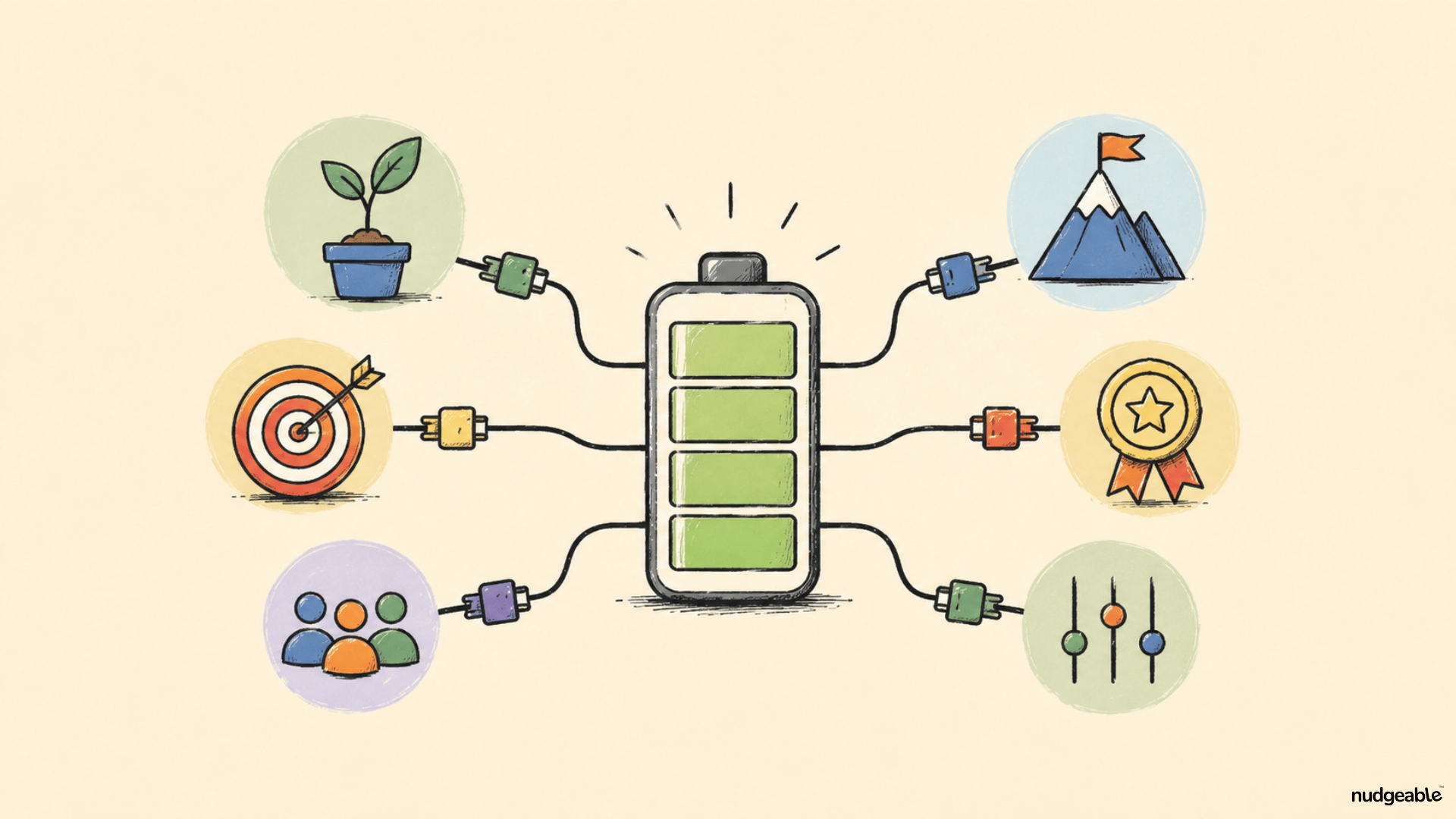
Employee motivation can come from several sources:
- Financial security and fair compensation
- Recognition from managers and colleagues
- A sense of progress
- Freedom to make decisions
- Learning and professional growth
- Belonging to a respected team
- Meaningful or interesting work
People can pursue several of these needs at once. This is one problem with treating Maslow’s hierarchy as a fixed sequence. The world is full of artists who choose meaningful work despite financial uncertainty. People also leave secure jobs because they feel disrespected, overlooked or unable to grow.
A higher salary may matter greatly to one employee. Another may accept slightly less money for greater flexibility or more interesting work. Managers cannot understand individual motivation by looking at the salary column in a spreadsheet.
Incentives can work
There is a common claim that incentives always weaken intrinsic motivation. The research is more nuanced.
Incentives can improve performance when the desired result is clear and the reward is connected to it. Sales commissions, production bonuses and rewards for completing a defined activity can all influence behavior.
The effect becomes more complicated when someone already finds an activity interesting. A meta-analysis of 128 studies found that some expected tangible rewards could reduce free-choice intrinsic motivation, while positive feedback could increase interest.
Imagine that someone enjoys solving difficult customer problems. If every attempt is converted into points or cash, the person may gradually see the payment as the main reason for doing it.
This does not mean incentives should disappear. It means we need to consider which behavior we are rewarding and what message the reward sends.
Key insight: An incentive can direct attention towards a behavior. It can also change the reason people believe they are performing that behavior.
Productivity and creativity need different conditions
Money can be useful when the activity is predictable and the output is easy to measure, such as processing requests or meeting a clear sales target.
Creative work is harder to reduce to a simple target. When people find a problem interesting, they may explore unusual ideas because the activity itself feels rewarding. A tightly controlled incentive can narrow attention towards whatever gets measured.
If the reward is based on the number of ideas submitted, employees may generate more ideas. The ideas will not necessarily become more original or useful.
For work involving judgment or experimentation, managers should ask:
- Is the problem interesting?
- Do employees have enough freedom to explore?
- Can they see the impact of their work?
- Are mistakes treated as part of learning?
- Is recognition focused on thoughtfulness as well as the result?
Financial rewards may still have a role, but they cannot replace good job design.
Timing matters
Organizations often separate the behavior from the reward by several weeks. A salesperson may demonstrate the desired behavior today and receive an incentive at the end of the month.
If the aim is to reinforce behavior, recognition should happen reasonably close to it.
Compare these responses:
- “You have been doing good work. Keep it up.”
- “The way you clarified the customer’s concern before suggesting a solution helped calm the conversation.”
The second response identifies exactly what should be repeated. Annual awards can celebrate overall achievement. Timely recognition is more useful for reinforcing everyday actions.
Choice can increase commitment
People value freedom. Even when options are limited, having some control can increase commitment.
Managers can offer choice around:
- Which skill an employee wants to develop
- How they approach a piece of work
- Which action they practise after training
- What kind of recognition they value
A person is more likely to follow through on a commitment they actively chose.
Before blaming motivation, managers should also examine the environment. Is the expectation clear? Is the process unnecessarily difficult? Does the employee have the skill and confidence required? Are other priorities competing for attention?
Sometimes motivation is the barrier. At other times, the desired behavior has been made difficult or unclear.
Apply motivation through action design
The Nudgeable Actions Engine applies several of these principles after training. Participants choose the actions they want to practise, decide the frequency of their commitment and receive timely nudges. Social accountability and immediate reinforcement help keep the action active.
There is no single answer to what motivates employees. Money matters, alongside autonomy, progress, belonging, recognition and the design of the work itself.
The manager’s role is to stop assuming and start finding out which combination matters to the person in front of them.