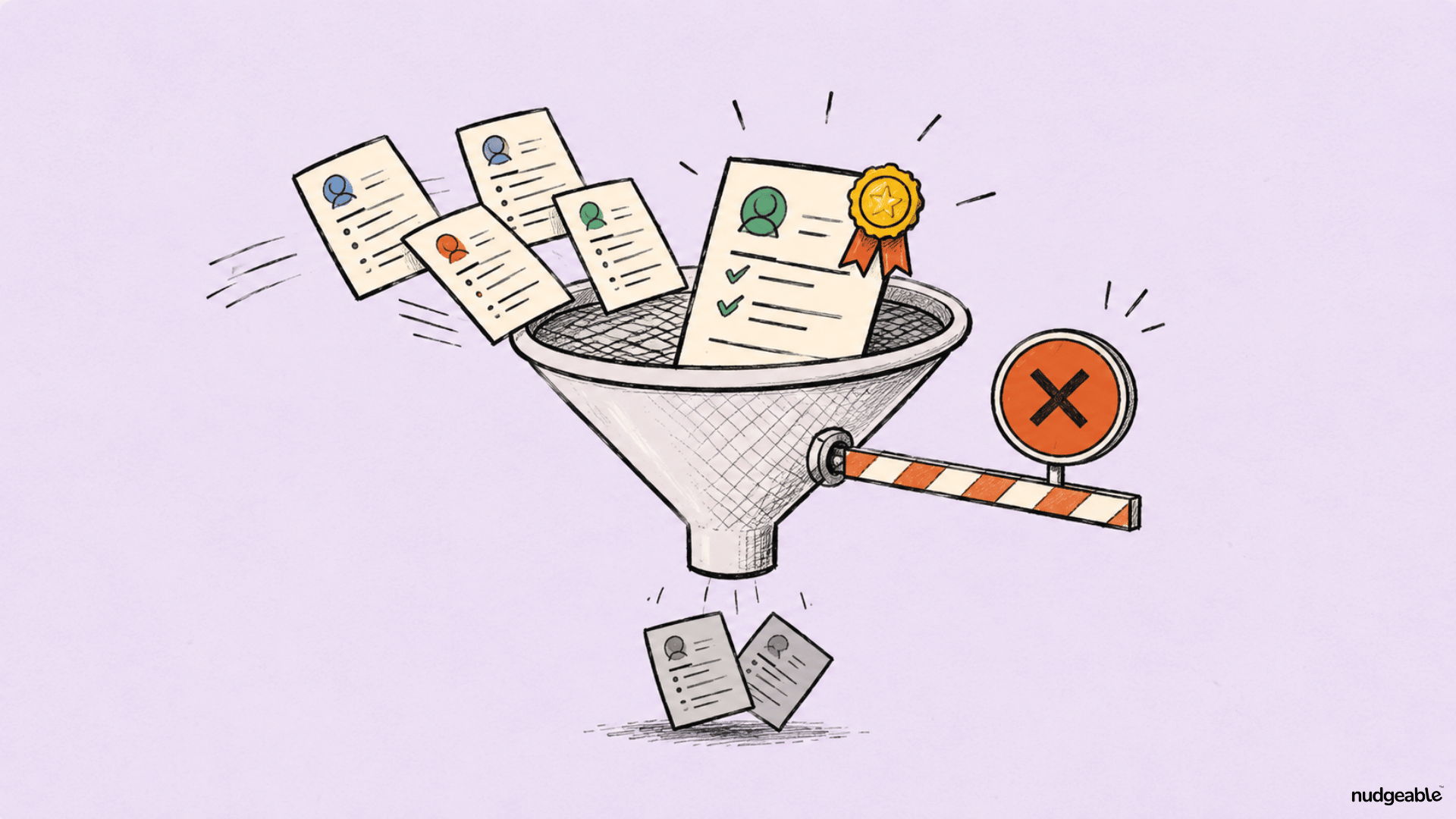
Why Performance Ratings Say More About the Manager
Employee performance ratings often appear objective, but they are heavily influenced by each manager’s personal standards and beliefs. This blog explains performance rating bias and how organizations can make reviews fairer and more useful.
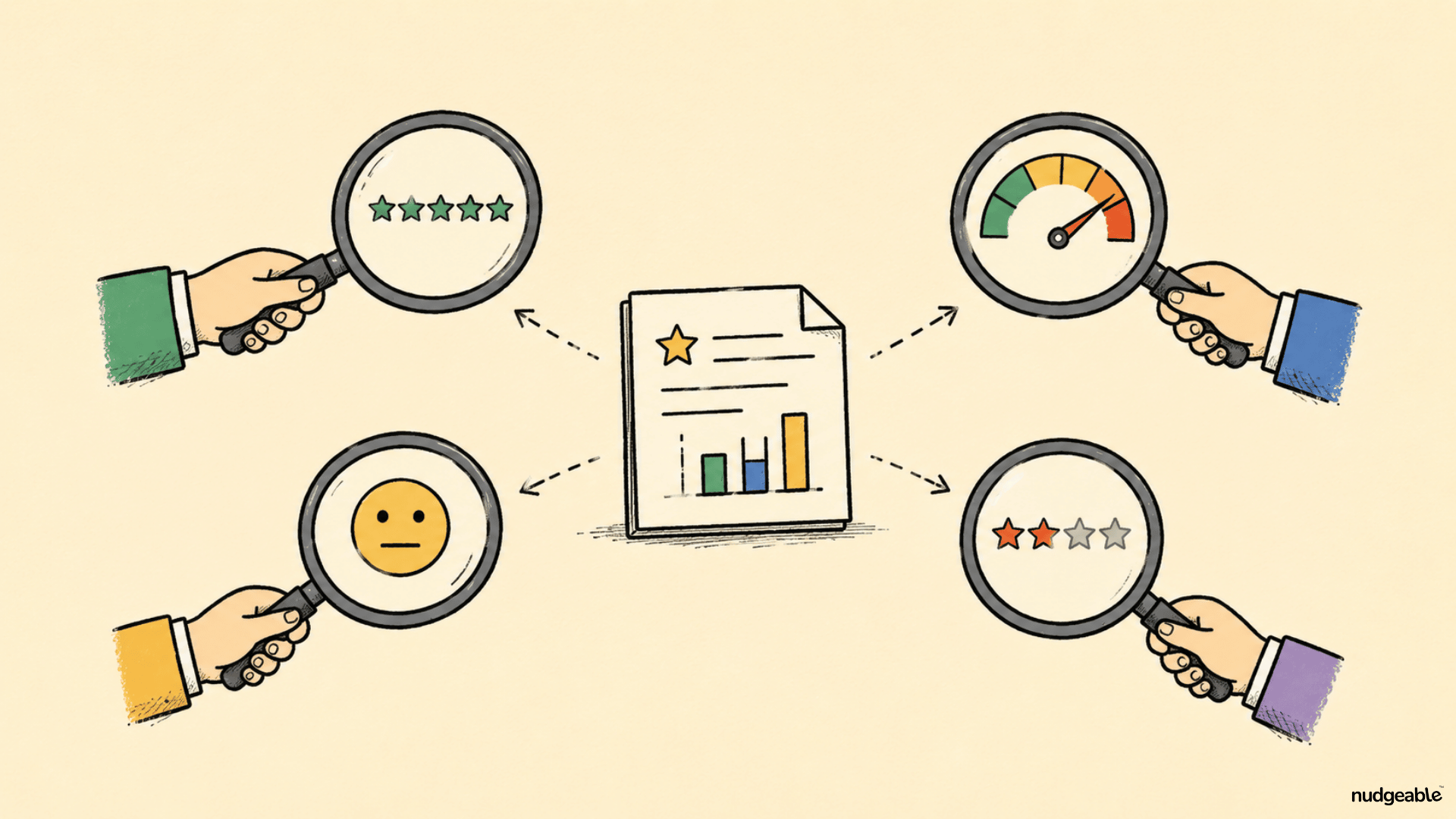
Imagine that you are rating an employee on “strategic thinking.”
What exactly are you rating?
One manager may define strategic thinking as anticipating future risks. Another may value ambitious ideas, while someone else may judge whether the employee understands the commercial impact of a decision.
All three use the same rating scale. They may be evaluating completely different things.
This is one of the central problems with employee performance ratings. The number looks precise, but the judgment behind it is personal.
Key insight: Performance ratings are influenced by what the manager values, how they define good performance and how strictly they use the scale.
The idiosyncratic rater effect
The tendency for ratings to reflect the person giving them is known as the idiosyncratic rater effect.
Research by Scullen, Mount and Goff found that a significant share of rating variation could be attributed to the rater. The widely cited analysis estimated this at around 62% of the variance.
When a manager rates qualities such as potential, collaboration or strategic thinking, the score can reveal:
- How they define the quality
- How much they value it
- Which behaviors they notice
- How generously or strictly they rate
- Which type of employee they prefer
Imagine that I value speed and decisive action. I may rate employees who respond quickly more highly. Another manager may value careful analysis and see the same employee as impulsive.
The employee has not changed. The person holding the rating scale has.
We reward people who work like us
Managers naturally notice qualities they recognize in themselves.
A manager who built their career by working long hours may interpret visible effort as commitment. Someone who values confidence may rate an outspoken employee more highly than a quieter person producing equally useful work.
This can create familiar patterns:
- Analytical managers favour employees who provide detailed evidence.
- Fast decision-makers value people who act without much discussion.
- Relationship-focused managers notice collaboration and support.
- Managers with prestigious qualifications may favour similar backgrounds.
Personal preferences become a problem when they are treated as objective measures of performance.
Key insight: We often rate employees more highly when they display the qualities that helped us succeed, even when their role may require something different.
Annual reviews compress an entire year
A performance review reduces months of changing work into a few ratings and comments.
The manager is expected to remember projects delivered several months ago, support provided to colleagues, changes in priorities and work that happened outside their direct view.
Recent events are easier to recall. A visible mistake near the end of the year may receive more attention than months of consistent work. One successful project may also create a positive impression that influences unrelated ratings.
The annual rating assumes that performance is relatively stable. In reality, an employee may perform exceptionally in one role and struggle in another. Performance can change after a new manager, restructuring or family problem.
A single number cannot capture all this movement.
“High performer” becomes an identity
Organizations commonly classify employees as high or low performers. These labels influence how managers see people after the original evidence has changed.
Once someone is labelled a high performer:
- Their mistakes may be treated as temporary exceptions.
- They may receive more challenging opportunities.
- Their ideas may receive more attention.
- Success is attributed to ability.
A person labelled as a low performer can experience the opposite. Their successes may be treated as luck, while every mistake confirms the existing view.
A more useful approach is to describe the employee’s contribution during a defined period: below expectations, aligned with expectations or above expectations. This keeps attention on performance without turning the rating into the person’s identity.
Manager expectations change behavior
A manager who believes an employee is capable may give that person more responsibility, encouragement and feedback. The employee receives opportunities to learn and begins performing with greater confidence.
When the manager expects failure, they may closely control the work, offer fewer opportunities and notice mistakes more quickly.
This is related to the Pygmalion effect, where higher expectations can contribute to better performance. The manager’s belief begins creating evidence that appears to confirm it.
This does not mean ignoring genuine performance problems. It means keeping expectations open to revision.
A low annual rating arrives too late
A low rating is often intended to discourage poor performance, but it usually arrives months after the relevant behavior.
Useful feedback should explain:
- What specific behavior created the problem
- What impact it had
- What needs to change
- What support is available
- How improvement will be observed
“Needs improvement in stakeholder management” gives little direction. A better conversation identifies that project changes were shared too late, explains the impact and agrees on a communication practice for future work.
Make performance reviews more useful
Ratings may still be needed for decisions involving pay, promotions and succession. They should be treated as one imperfect source of information.
Organizations can improve the process by:
- Defining observable behaviors instead of abstract qualities
- Recording evidence throughout the year
- Gathering more than one perspective
- Calibrating ratings across managers
- Separating development discussions from pay decisions where possible
- Giving timely and specific feedback
The Nudgeable Actions Engine can turn broad development goals into workplace actions. “Improve stakeholder management” might become “Share a weekly update with affected teams” or “Ask one stakeholder for input before finalizing a decision.”
Performance ratings will always involve human judgment. Before treating a score as a precise measure of an employee, we should remember how much of it may belong to the person holding the pen.