How to Build Trust at Work: The Behaviors That Matter
Trust at work is built through repeated signals of care, competence and consistency. This blog explains the behavioral science behind workplace trust and the small actions leaders and teams can use to strengthen it.
Think about someone you trust at work.
Why do you trust them?
Perhaps they supported you during a difficult situation. They may have consistently delivered what they promised or given you honest advice when it would have been easier to remain silent.
Now think about someone you do not trust. There may not have been one major event. Your distrust may have developed through smaller experiences: they failed to keep you informed, changed their position depending on who was present or disappeared when a problem emerged.
Workplace trust usually grows or declines through these everyday interactions.
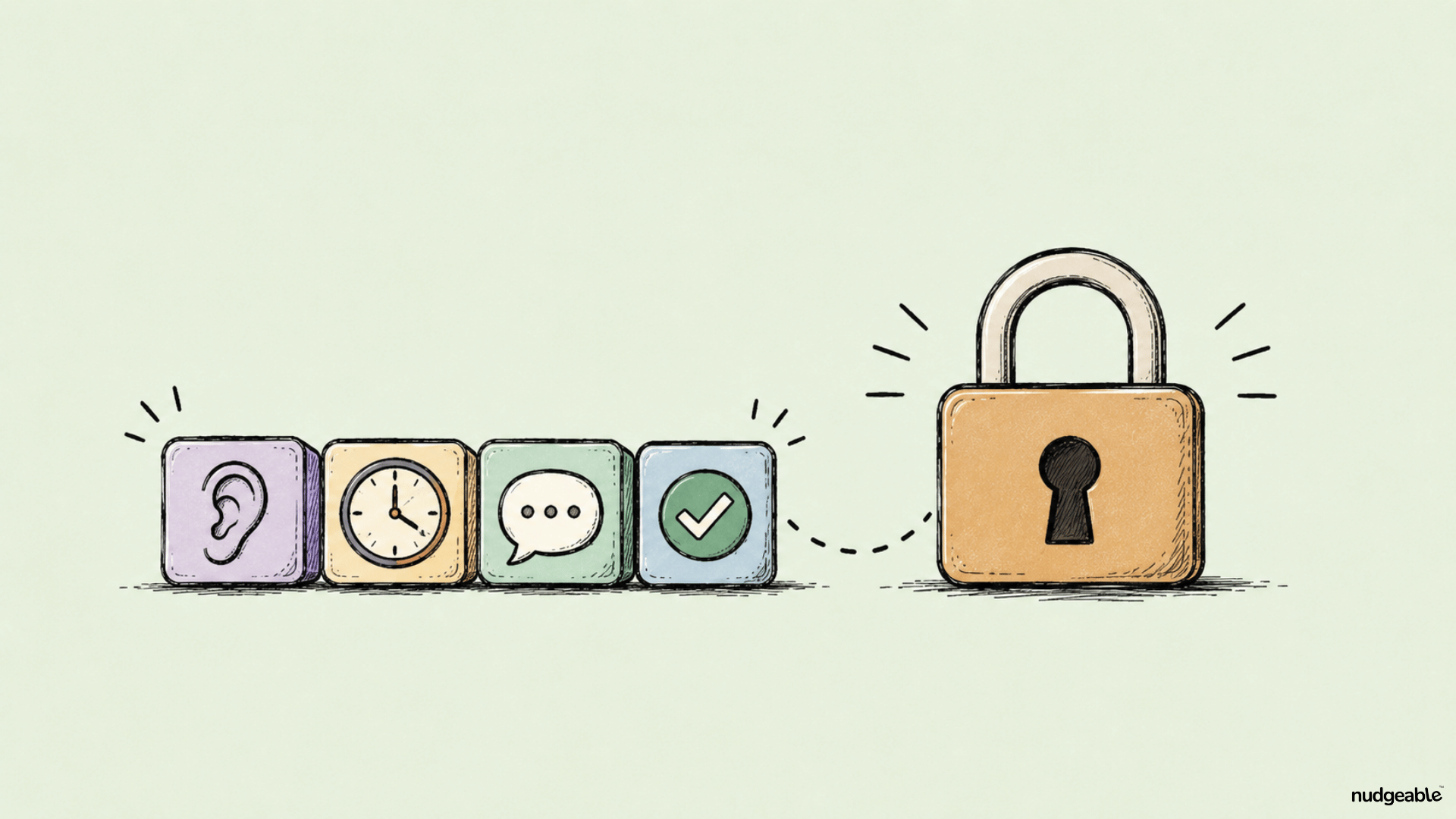
Key insight: Trust is built through accumulated evidence. Every promise kept, difficult conversation handled well and honest mistake admitted tells people whether they can rely on you.
The three drivers of workplace trust
Research by Zenger Folkman identifies three elements of leadership trust:
- Positive relationships
- Good judgment and expertise
- Consistency
Leaders need strength across all three. A highly capable leader who treats people badly will struggle to earn trust. A supportive leader who repeatedly makes poor decisions creates a different trust problem. A competent and caring leader who rarely follows through will eventually lose credibility.
1. Positive relationships
Relationships show that the leader cares about the person, rather than only the output they produce.
This can be demonstrated by:
- Staying in contact when someone faces a difficult situation
- Balancing the need for results with concern for the person
- Resolving conflict instead of allowing it to continue
- Giving honest feedback that helps someone improve
- Supporting people after a reasonable mistake
Building a positive relationship does not require a manager to become everyone’s closest friend. It means showing through action that people matter.
A leader who asks about an employee’s family but ignores their workload problem is unlikely to build much trust. The conversation sounds caring, but the employee will judge what happens afterwards.
2. Good judgment and expertise
Being friendly is not enough. People also need confidence in a leader’s ability to understand the work and respond effectively when problems arise.
Employees are more likely to trust a leader who uses relevant information, acknowledges when they do not know something and changes position when new evidence emerges.
Imagine having a supportive manager who repeatedly makes decisions that damage your work. You may like the person, but you will eventually stop relying on their judgment.
Expertise also influences whether feedback is accepted. When people believe the giver understands the work, they are more willing to consider the advice.
Key insight: Relationships make people open to your intentions. Expertise gives them confidence in your decisions.
3. Consistency
Trust requires some ability to predict how another person will behave.
We trust people who keep promises, apply similar standards and broadly behave in ways that match what they say.
Consistency is visible when leaders:
- Follow through on agreed commitments
- Give an update when a deadline will be missed
- Apply similar standards across team members
- Avoid promises they cannot realistically keep
- Take responsibility when something goes wrong
A leader may speak about transparency and then withhold important information. They may encourage experimentation but punish the first visible failure.
People notice these contradictions. One broken promise may be forgiven. A repeated pattern becomes the leader’s reputation.
Why vulnerability can build trust
Some leaders believe they need to appear confident and in control at all times. They reveal the parts of themselves that will impress the team while hiding uncertainty, mistakes and weaknesses.
This can make the leader feel distant.
Appropriate vulnerability makes a leader more relatable. A leader can say:
- “I am not sure about this decision yet.”
- “I underestimated the amount of work involved.”
- “I reacted defensively in that meeting.”
- “I made the wrong call, and here is what I learned.”
Research has examined how carefully used supervisor self-disclosure can influence employee trust. The disclosure needs to be genuine, relevant and appropriate. Vulnerability should not make employees responsible for managing their leader’s emotions.
Self-disclosure and reciprocity
Trust often develops when one person takes a small interpersonal risk.
Imagine that a colleague shares something personal about a difficult project or professional failure. You may feel an urge to respond with a similar experience. This is the rule of reciprocity.
The same principle appears when neighbours send over a plate of biryani and we feel an obligation to return the favour later. The first gesture begins an exchange.
At work, the process may look like this:
- One person shares something genuine.
- The other person feels trusted.
- They become more willing to share.
- Repeated conversations strengthen the relationship.
Start with something small and relevant. Sharing highly personal information with a new colleague can create discomfort instead of trust.
Similarity creates a quick connection
Discovering that a colleague supports the same football team, grew up in the same city or enjoys the same food can make conversation easier. Even ordering the same dish during lunch can create a small feeling of connection.
However, similarity also creates a risk. Leaders can unconsciously give more time and trust to employees who remind them of themselves.
Use common ground to open conversations while consciously building relationships with people whose backgrounds and working styles are different from yours.
Turn trust into everyday actions
“Build trust” is too abstract to guide behavior. Leaders need actions they can repeat:
- Keep one commitment you might otherwise postpone.
- Admit one mistake without adding an excuse.
- Ask a team member what support they need.
- Share the reasoning behind one decision.
- Inform someone early when you may miss a deadline.
The Nudgeable Actions Engine can extend leadership training by turning ideas such as trust and vulnerability into workplace actions. Participants choose relevant actions, practise them during work and receive reminders to keep their commitments active.
Trust cannot be demanded through a culture statement. People decide whether to trust us by watching what we repeatedly do, especially when keeping a promise becomes inconvenient.