The Real Reason Teams Struggle to Collaborate
Organizations try to solve trust through team-building activities and workshops. But these fundamentally misunderstand what trust actually is and how it forms.
Every few months, I hear some version of the same problem from leaders:
“Our teams just don’t collaborate well.”
The response is usually predictable. Run a collaboration workshop. Create another cross-functional task force. Introduce a new tool. Redesign who reports to whom.
All of these can help. But they often focus on the visible problem rather than what is happening underneath it.
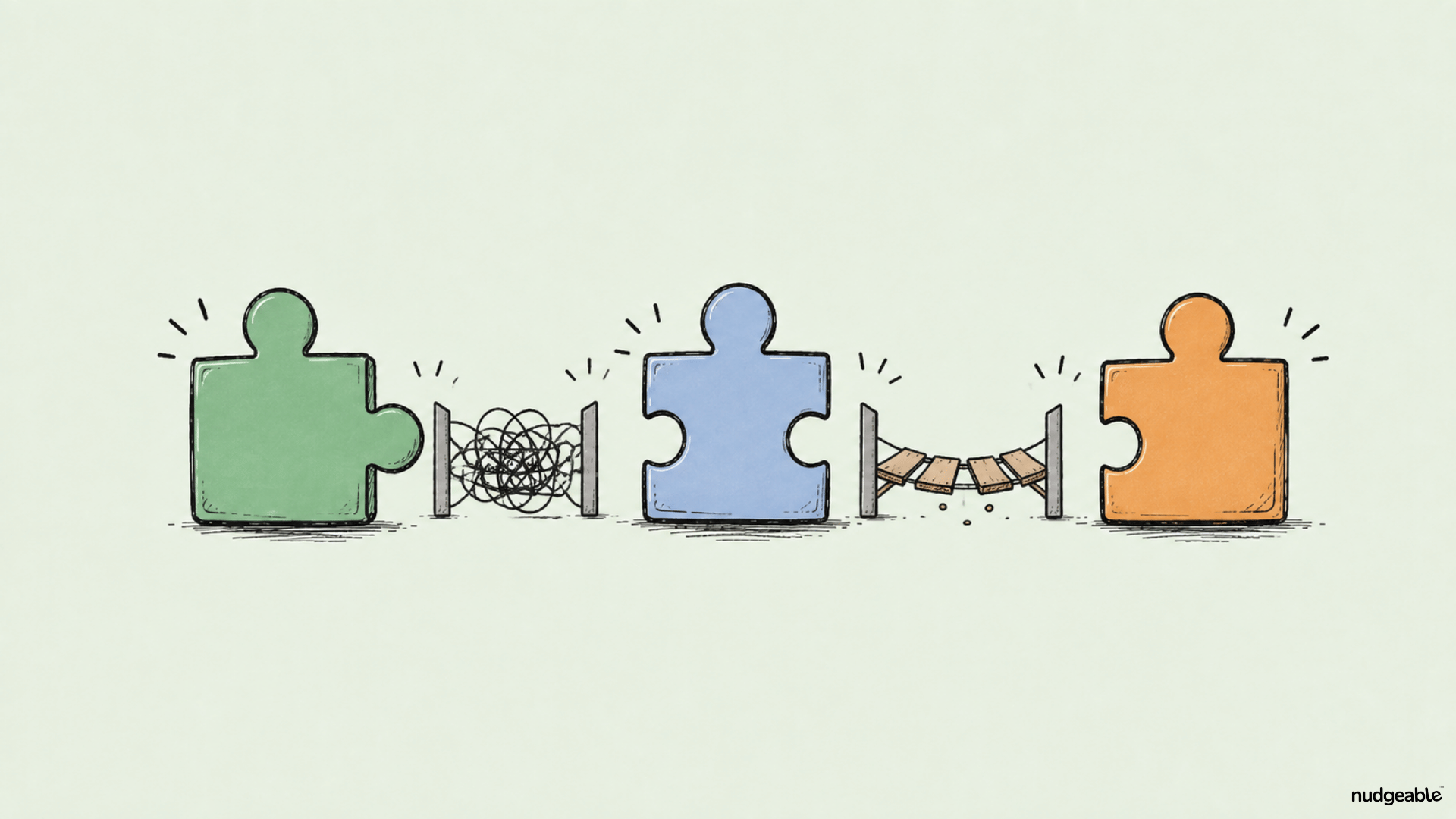
Because collaboration requires people to take small interpersonal risks all the time.
You share an idea before it is fully formed. You admit that you need help. You depend on another team to deliver. You give someone information they could potentially use to get ahead of you. You disagree openly instead of protecting yourself.
People are far less likely to do any of those things when they don’t trust the people around them.
Collaboration Is What You See. Trust Sits Underneath It.
When trust is low, the signs are usually quite visible.
People hold back information until they absolutely need to share it. Teams protect their turf. Difficult conversations happen after the meeting rather than inside it. People duplicate work rather than depend on another team. Ideas are polished internally before anyone feels safe enough to expose them to criticism.
From the outside, this looks like poor collaboration.
But people often know perfectly well how to collaborate. They simply don’t believe collaborating is safe, useful, or likely to be reciprocated.
That distinction matters, because another workshop on collaboration skills may do very little if the real question running through people’s heads is:
“Can I actually trust these people?”
What Is Trust Actually Made Of?
I recently came across behavioral scientist Jon Levy’s Trust Hierarchy, and it gave me a useful way of thinking about this.
Research on organizational trust has long identified three important dimensions of trustworthiness: ability, benevolence, and integrity.
Levy describes them in simpler terms:
- Competence: Can you actually do what is expected of you?
- Honesty: Can I believe what you tell me?
- Benevolence: Do I believe you have my best interests at heart?
His interesting insight is that we don’t appear to value all three equally.
He frames the hierarchy as:
Benevolence → Honesty → Competence
Think about how this plays out in real life.
A colleague you respect makes a mistake on a project. You probably don’t immediately conclude that they are incompetent. You give them some room. Maybe they were overloaded. Maybe they had a bad day.
Now imagine discovering that the same colleague deliberately lied to you.
That lands very differently.
You start questioning other things they told you. The problem is no longer one mistake. You are suddenly less certain about the relationship itself.
And then there is benevolence.
Imagine your friends tell you they are taking you to dinner, but when you arrive, you discover they have organized a surprise birthday party.
Technically, they misled you. Yet you are unlikely to conclude that they are untrustworthy because you understand why they did it. Their intention was clearly in your interest.
That is the important part of Levy’s hierarchy: our judgment of someone’s intentions can shape how we interpret everything else they do.
We Spend a Lot of Time Proving Competence
This is where the idea becomes particularly relevant at work.
Organizations spend enormous effort building and signalling competence.
We hire for expertise. Promote based on performance. Train people to communicate better. Create competency frameworks. Celebrate expertise and results.
All of that matters.
But think about the colleague who is exceptionally competent and yet constantly optimizes for their own success. They withhold information, take credit quickly, make other teams look bad, or disappear when someone else needs help.
You may respect their capability.
You probably won’t want to depend on them.
And collaboration depends heavily on exactly that: our willingness to depend on other people.
So perhaps one of the most overlooked questions in collaboration is not whether people believe their colleagues are capable.
It is whether they believe their colleagues want them to succeed.
Care Is Too Often Treated as a Personality Trait
This creates another problem.
“Care about your colleagues” sounds nice, but it is almost useless as a behavioral instruction.
You can’t tell someone to become more caring on Monday morning. Putting “caring” into a leadership competency framework doesn’t suddenly change what happens during Tuesday’s project meeting.
Behavior needs to be more specific.
Instead of asking people to care more, we can help them practice small actions that make care visible.
That is an important distinction because other people cannot see our intentions. They can only interpret our behavior.
Over time, those behaviors become evidence.
Three Micro-Actions That Make Care Visible
Here are three small actions almost anyone can practice.
1. Remember something that matters to someone
Ask about something beyond the immediate task and actually listen to the answer.
The important part is what happens later.
If someone mentions that their child has an exam, they are moving house, or they are struggling with a difficult client, remember it and follow up.
The follow-up is what turns a polite conversation into evidence that you were paying attention.
2. Help someone else succeed visibly
In a meeting, give credit to the person whose thinking helped shape the work.
When handing something over, give the other person the context they need rather than simply completing your piece.
Before making a decision, ask:
“Will this make another team’s job unnecessarily harder?”
Care becomes much more credible when people can see that you considered their success alongside your own.
3. Offer specific help before someone has to ask
“Let me know if you need anything” puts the work back on the person who is already struggling.
A more useful behavior is specific:
“I can take the first draft of this if that helps.”
Or:
“I have dealt with this client before. Want me to spend 15 minutes walking you through what worked?”
Small difference. Very different signal.
Trust Is Built Through Evidence, Not Intention
This is where I think many organizational interventions fall short.
A two-hour workshop can introduce the importance of trust. It can teach collaboration frameworks. It can even get teams talking openly for a few hours.
But trust gets tested after the workshop.
It gets tested when someone needs help. When information needs to be shared. When a deadline gets missed. When credit is being distributed. When two teams disagree about priorities.
Those everyday moments create the evidence people use to decide whether they can trust one another.
Which means improving collaboration requires more than explaining the right behavior.
People need repeated opportunities to practice it.
Turning the Insight Into Everyday Behavior
This is also one of the reasons we built the Nudgeable Action Management Platform around small, specific actions rather than simply more learning content.
After a program on collaboration, trust, leadership, or psychological safety, someone might receive a simple action such as:
Offer one colleague specific help before they ask for it this week.
Or:
In your next team meeting, publicly credit someone whose input improved your work.
These actions take minutes. But they move an abstract idea such as “build trust” into something a person can actually do.
Nudges then bring those actions back into the flow of work, where trust is actually being built.
The goal is not to remind people of what they learned in the workshop.
The goal is to make the behavior easier to practice until other people begin to experience the difference.
A Better Question for Leaders
The next time a leadership team says:
“How do we get people to collaborate better?”
I would add another question:
“What evidence do our people have that their colleagues genuinely care about their success?”
If the answer is “not much,” another collaboration workshop probably won’t solve the problem on its own.
Start with the everyday behaviors that make care visible.
Because once people believe their colleagues have their best interests at heart, it becomes easier to share unfinished ideas, ask for help, disagree openly, depend on another team, and solve problems together.
And that is where genuine collaboration starts.