Before Blaming Employees, Count the Clicks
Low completion is often blamed on employee motivation when the process itself is difficult, vague or easy to postpone. This blog explains how behavioral friction affects workplace action and how organizations can make desired behaviors easier.
Why do employees fail to update their goals, submit leave requests or complete a required form?
The usual explanation is that people are careless, resistant or unmotivated.
Now count how many steps the employee needs to complete.
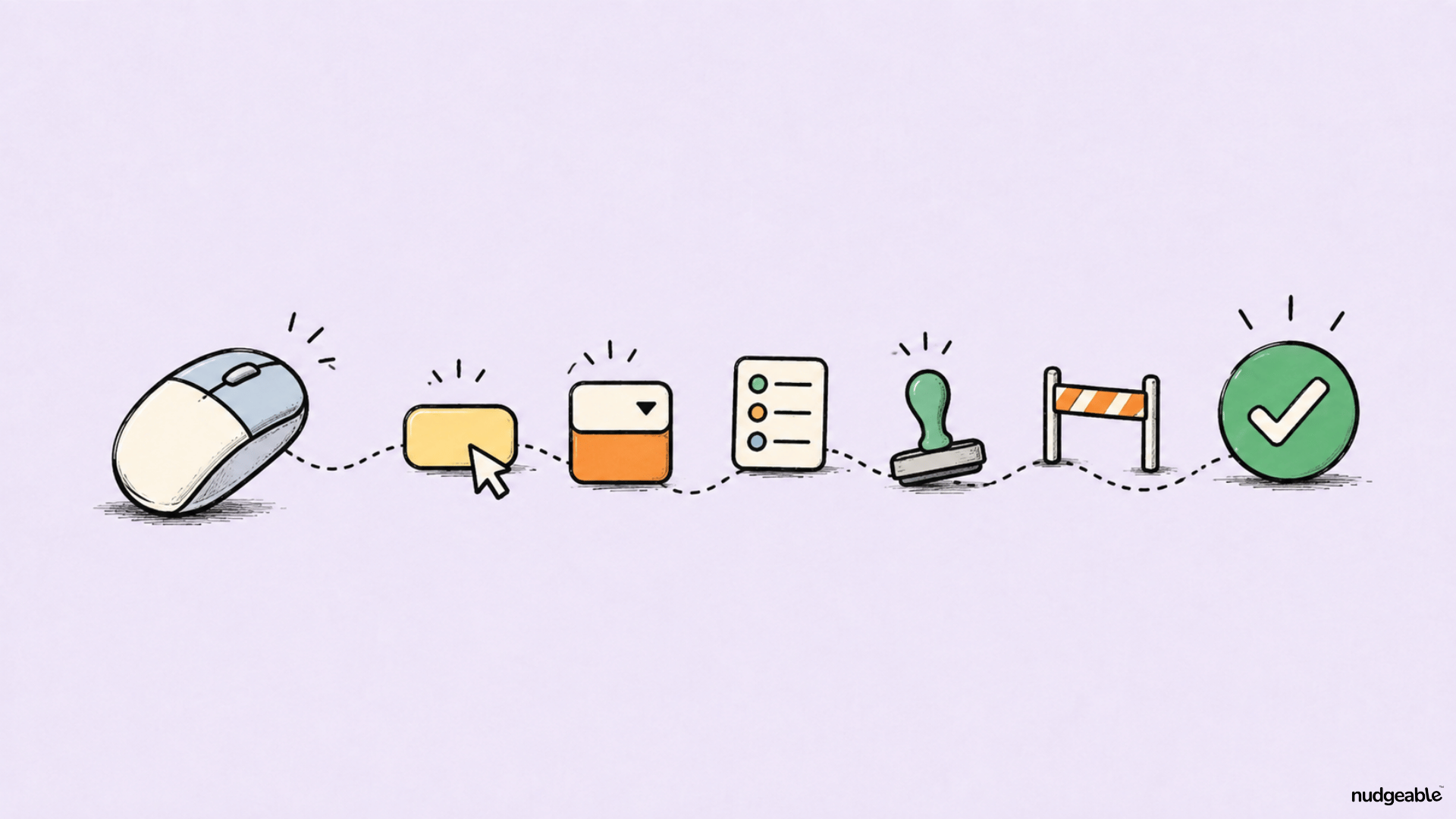
Imagine that applying for leave requires opening the HR portal, finding the correct menu, selecting the leave type, entering several details and moving through 14 clicks.
Posting something on LinkedIn may take two clicks.
Employees are the same in both situations. The effort required by the systems is different.
Key insight: When a desired behavior is difficult, organizations often blame the person before examining the process.
Our brain prefers the easier route
Human beings naturally conserve effort. This tendency helped our ancestors preserve energy for finding food, shelter and avoiding danger.
Modern work rarely involves escaping wild animals, but the preference for lower effort remains. Every additional click, decision and confusing instruction creates another opportunity to postpone or abandon an action.
Behavioral science uses the term friction for the effort that makes an action harder. Unnecessary or harmful friction is sometimes called sludge. A meta-analysis of nudge and sludge describes nudges as facilitating action while sludge inhibits it by increasing friction.
Workplace friction can include:
- Too many approval levels
- Repeated data entry
- Confusing instructions
- Unclear ownership
- Long forms
- Vague deadlines
- Systems that require information employees do not have
Each individual step may appear reasonable. Together they can make a simple action feel unpleasant.
Motivation is only one possible barrier
When someone fails to act, managers often make a quick judgment about their attitude.
The COM-B model offers a better diagnostic. Behavior can be influenced by:
- Capability: Does the person have the skill and knowledge?
- Opportunity: Does the environment make the behavior possible and easy?
- Motivation: Does the person want or remember to do it?
Suppose employees are not using a new HR system. Another communication campaign will have limited value if the real problem is a confusing process or missing access.
Key insight: Before trying to increase motivation, check whether employees can perform the action and whether the environment supports it.
“Can anyone help?” creates no ownership
Consider an email sent to twenty people:
“Dear all, can anyone help me with this report?”
The sender expects that someone will respond. Each recipient can assume that one of the other nineteen people will help.
This is related to the bystander effect. As responsibility becomes distributed across more people, each individual feels less personally responsible for acting.
A better request would name the person:
“Priya, could you please send the March data by 2 PM? Rohit, could you review the final table once it is ready?”
Specific ownership removes the need for recipients to decide who should act.
“Urgently” is not a deadline
People interpret vague instructions differently.
“Please respond urgently” may mean within ten minutes to the sender and by tomorrow to the receiver.
Compare it with:
“Please respond by 4 PM today so I can send the proposal before the client deadline.”
This message provides a shared time anchor and a reason.
Clear requests identify:
- The person responsible
- The required action
- The deadline
- The reason it matters
Clarity reduces the mental effort required to decide what to do.
Public commitments increase follow-through
In one experiment from your posts, details of an upcoming training program were shared on an internal social platform. Employees were asked to nominate themselves by commenting, “I would love to participate.”
The simple change nearly doubled participation.
Two behavioral mechanisms were involved. Employees could see colleagues and managers joining, which created social proof. Writing the comment also created a visible personal commitment.
The action moved beyond privately intending to attend. People had publicly stated what they planned to do.
Organizations can use similar commitments by asking people to select an action, state when they will complete it and make the commitment visible to an appropriate person.
Make the first step smaller
Imagine deciding to run five kilometres. The complete activity may feel difficult enough to delay.
Now reduce the commitment to running for two minutes. Once you have changed clothes, put on your shoes and left the house, continuing becomes easier.
The largest resistance often appears at the beginning.
This principle can simplify workplace actions:
- “Complete the project plan” becomes “Write the first three milestones.”
- “Prepare the presentation” becomes “Create the slide titles.”
- “Build a relationship with the new colleague” becomes “Schedule a fifteen-minute conversation.”
- “Improve your coaching” becomes “Ask one question before offering advice.”
Once people begin, unfinished work can remain active in their mind and pull them back towards completion. This is known as the Zeigarnik effect.
Run a friction audit
Before asking why employees are not following a process, examine the process itself:
- How many clicks or approvals are required?
- Which information must be entered more than once?
- Is ownership clear?
- Is there a specific deadline?
- Can the first step be made smaller?
- Does the employee receive confirmation or feedback?
- Can an unnecessary step be removed?
The Behavioural Insights Team similarly recommends minimizing unnecessary clicks when reducing sludge in digital processes.
Design for follow-through
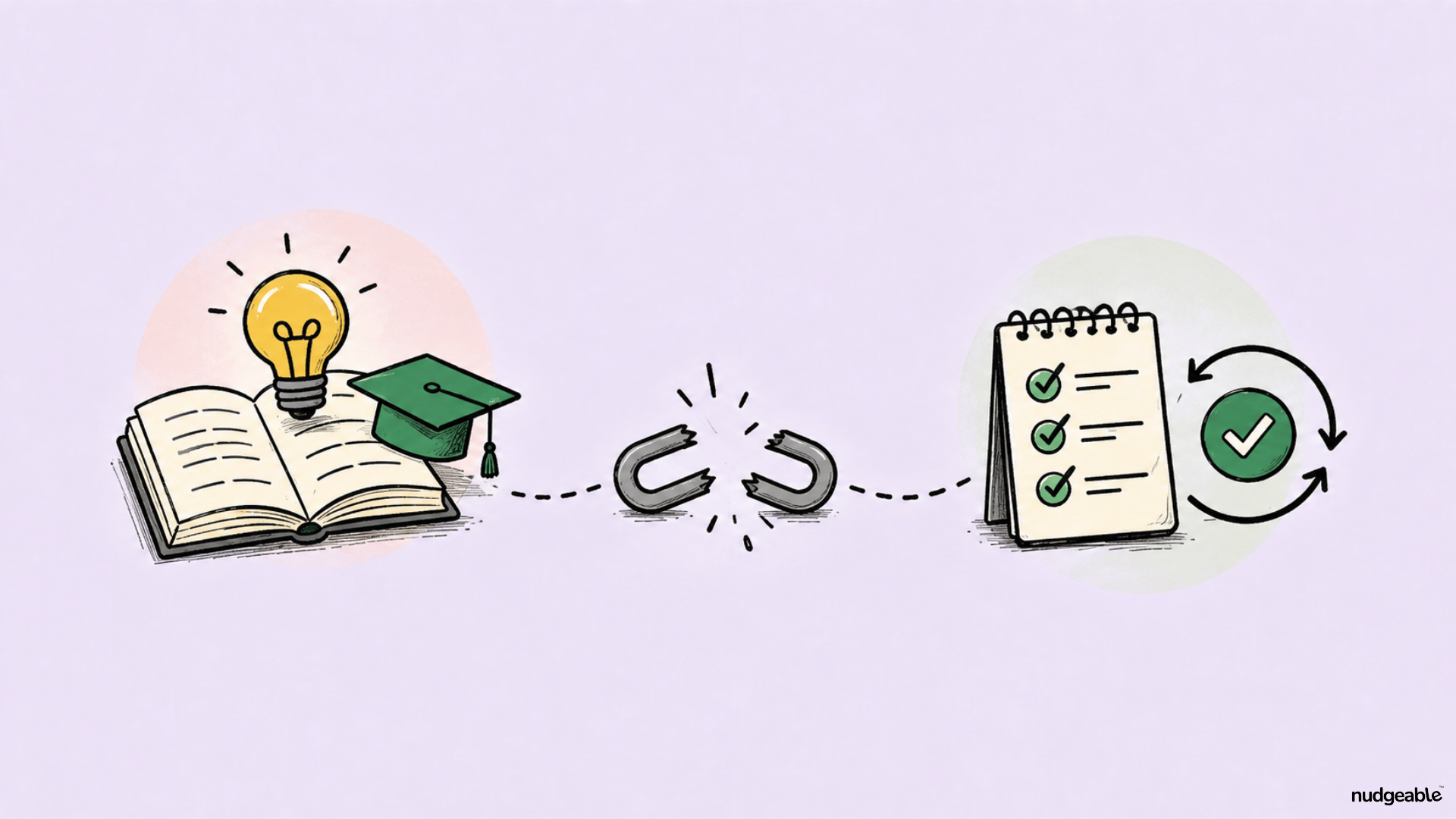
The Nudgeable Actions Engine uses active choice, specific commitments and timely nudges to make post-training action easier. Participants choose what they will practise, decide the frequency and confirm completion in one click.
When completion remains low, another reminder may not be the answer. Count the decisions, fields, approvals and clicks standing between intention and action.
Sometimes the employee needs motivation. Sometimes the organization simply needs a better process.