A Manager’s Framework for Customer-Centricity
Think about customer centricity from behavioral science perspective
Most customer experience programs start with the same ingredients.
A new policy.
A large training program.
A new CRM.
A new service framework.
Sometimes all of these help. But they often miss the part that actually shapes culture:
what people repeatedly do when nobody is reminding them.
Customer-centricity is not created by a launch event. It is created through hundreds of small decisions employees make every day.
Do I solve the customer’s problem, or pass it to someone else?
Do I follow the script, or use judgment?
Do I help a colleague recover a difficult situation, or say, “Not my customer”?
Those tiny behaviors eventually become norms.
And this is where managers have more influence than they sometimes realize.
You may not control the company’s incentive system, technology stack, or customer policies.
But you do control a large part of your team’s daily environment.
You decide what gets praised.
What gets challenged.
What people are trusted to do without permission.
What stories get repeated.
What “good customer service” actually looks like inside your team.
When I look at organizations known for customer experience, three themes keep appearing:
Freedom. Fun. Family.
Not as corporate values on a wall, but as everyday behavioral conditions.
1. Freedom: Give People Permission to Solve the Problem
One of the best-known examples comes from Ritz-Carlton.
Employees are famously empowered to spend up to $2,000 per guest incident to resolve a problem or create an exceptional experience without waiting for managerial approval.
The interesting part is not the $2,000.
Most employees are not spending anything close to that amount.
The real signal is:
“We trust you to use judgment.”
One famous story involves a child who left his stuffed giraffe, Joshie, behind at a Ritz-Carlton.
The hotel did not simply put the toy in a courier envelope.
Staff photographed Joshie enjoying an “extended vacation” around the hotel before sending him home, complete with pictures of his adventures.
Nobody needed a customer-service script telling them to do that.
Someone felt they had permission to create a good outcome.
That distinction matters.
Autonomy Changes How People Behave
Self-determination theory identifies autonomy as one of the basic psychological needs that supports motivation.
When people feel trusted to decide how to solve a problem, they are much more likely to take ownership of it.
Remove that discretion and employees quickly learn a different behavior:
“I’ll need to check with my manager.”
Or:
“Unfortunately, that’s our policy.”
Sometimes those responses are genuinely necessary.
But when employees need approval for every small decision, eventually they stop trying to solve problems themselves.
The organization has trained them to escalate.
And then we blame employees for “not taking ownership.”
Make it practical
You do not need a $2,000 policy.
Start much smaller.
Identify one or two customer decisions your team can make without escalating.
Maybe they can waive a small fee once.
Offer an additional support call.
Provide a minor upgrade.
Spend another 15 minutes solving a customer’s problem rather than closing the ticket quickly.
The principle is simple:
Define the boundary clearly, then trust people inside it.
A useful test is:
“If I heard this story in our town hall next month, would I be proud of the decision?”
If the answer is yes, consider giving the team permission to make it themselves.
2. Fun: Positive Energy Changes What People Are Willing to Do
Zappos has one of my favorite customer-service stories.
Late one night, someone attending a conference jokingly called Zappos customer service asking for help finding a pizza.
The obvious response would have been:
“We sell shoes.”
Instead, the representative reportedly helped find nearby pizza places that were still open.
The story gets repeated because it is slightly absurd.
And that is exactly why it matters.
The employee was not following a standard operating procedure for emergency pizza assistance.
They understood a broader norm:
If someone asks us for help, we try to help.
There was space for personality, humor, and improvisation.
That creates a very different customer interaction from a heavily scripted environment where employees are primarily trying not to make mistakes.
Fun Is More Useful Than It Sounds
“Fun at work” can sound fluffy.
But positive emotions influence behavior.
Barbara Fredrickson’s broaden-and-build theory suggests that positive emotions can broaden how people think and respond, increasing openness and prosocial behavior.
In practical terms, an employee who feels energized, psychologically safe, and comfortable using some personality has a wider behavioral range.
They can improvise.
They can connect.
They can turn a routine interaction into a memorable one.
Compare that with an environment where every customer conversation feels like an audit.
Employees naturally become cautious.
They follow the minimum requirement.
They protect themselves.
And customers feel the difference.
Make it practical
You do not need to manufacture “fun.”
That usually becomes painful quite quickly.
Instead, give genuine positive moments more space.
Start one weekly team huddle with a customer story.
Ask:
“What happened this week that made a customer smile?”
Or share one strange, funny, or unexpectedly human customer interaction.
Five minutes is enough.
Managers can also make it explicit that employees are allowed to sound human.
Professional does not have to mean robotic.
A respectful joke, a warm reply, or a small personal touch can often do more for a customer relationship than perfectly following a service script.
3. Family: Customer Experience Is Often a Team Sport
Mumbai’s Dabbawalas are famous for the reliability of their lunch-delivery system.
Hundreds of thousands of tiffin boxes move across Mumbai through an intricate network of trains, bicycles, sorting points, symbols, and handoffs.
What interests me is not only the operating system.
It is the social system underneath it.
Many Dabbawalas share deep community ties. New members learn from experienced members. Responsibility is highly collective.
If one person fails, the impact is not viewed purely as an individual failure.
The group carries the consequence.
That creates a powerful sense of:
“This is our responsibility.”
And that mindset matters enormously for customer experience.
Shared Identity Changes the Question People Ask
Social identity theory helps explain why.
When people strongly identify with a group, group norms begin influencing individual behavior.
The question shifts from:
“What am I required to do?”
toward:
“What do people like us do?”
That is a much stronger cultural mechanism.
Think about the difference between these two situations.
A customer complains about something another department did.
In one team, the reaction is:
“That belongs to Operations.”
In another:
“That is our customer. How do we fix it?”
Same company.
Same customer.
Completely different identity.
Customer-centric organizations usually manage to create some version of the second response.
Make it practical
Listen to the language inside your team.
Language often reveals the culture before surveys do.
Do people say:
“Your customer.”
“Their issue.”
“Sales promised it.”
Or:
“Our customer.”
“Our problem.”
“How do we recover this?”
Managers can influence this through surprisingly small changes.
Make onboarding a team responsibility rather than something HR completes.
Give every new employee a buddy whose job is not merely to explain processes, but to show:
“This is how we treat customers here.”
Then ask the new employee after 30 days:
“What have you noticed about how this team treats customers?”
Their answer will tell you far more about the real culture than the employee handbook.
If you manage a team and want to improve customer experience, you do not need to begin with another transformation project.
Start by looking at the environment your team experiences every day.
Freedom
Where can employees use judgment without asking you first?
Fun
Where can employees bring some energy, humanity, and personality into the customer experience?
Family
Do people experience customer problems as individual responsibilities or shared responsibilities?
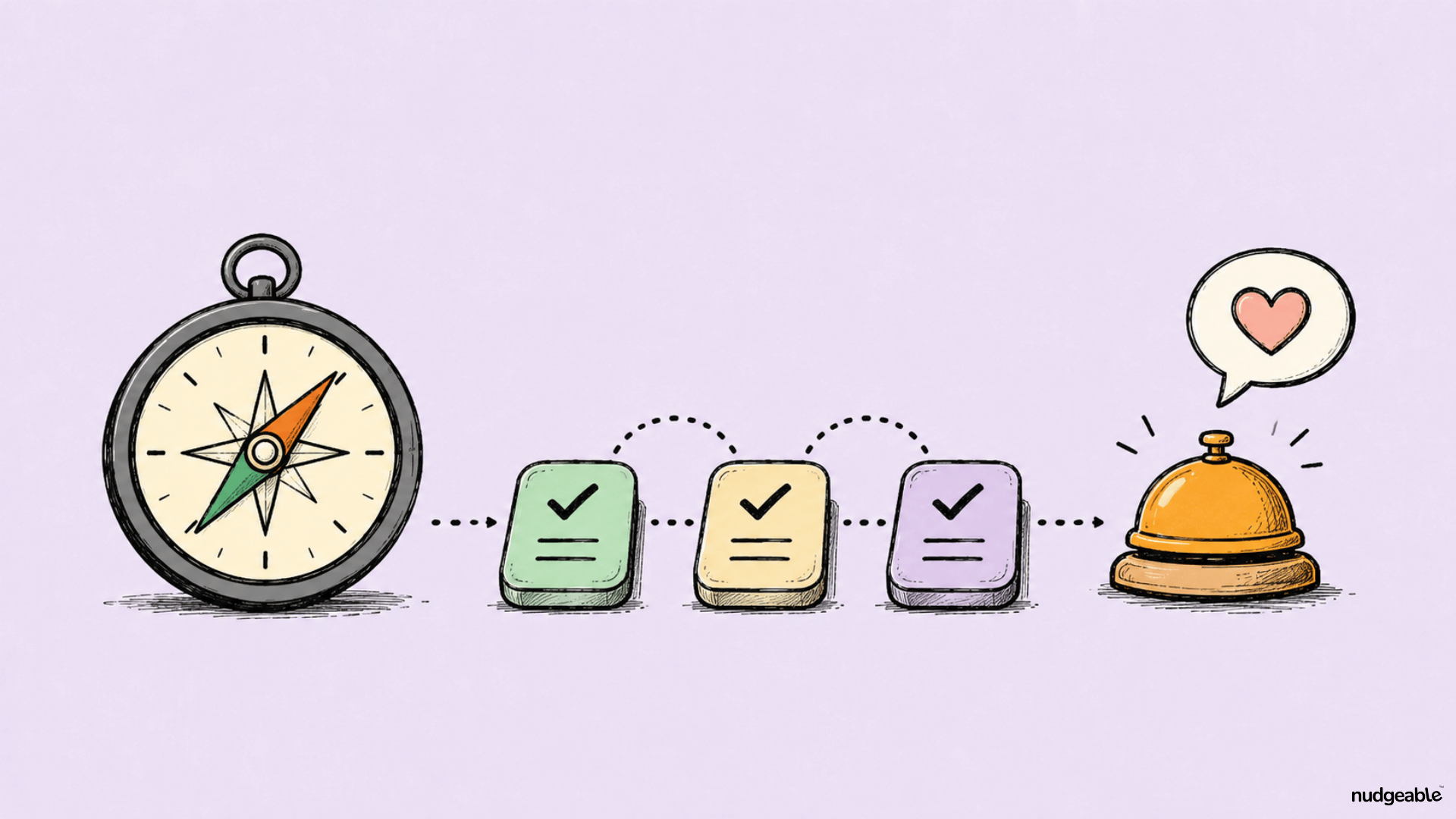
Those three conditions shape hundreds of small behaviors.
And those behaviors eventually shape what customers experience.
Try Three Small Changes for 30 Days
Pick one action from each area.
Freedom: Give the team one clearly defined decision they can make without escalation.
Fun: Spend five minutes each week sharing one memorable customer moment.
Family: Deliberately change your language from “your customer” to “our customer” when problems arise.
Do it consistently for a month.
Then pay attention.
Are people escalating fewer small decisions?
Are more customer stories being shared?
Are team members stepping in to help one another?
Are customers getting faster, more human responses?
That is how culture starts becoming visible.
Culture Is a Pattern of Repeated Behavior
This is also why customer-centricity cannot be solved through training alone.
Training can explain what great service looks like.
Policies can define boundaries.
Technology can make customer information easier to access.
But eventually, the customer experiences the behavior of an employee.
And that behavior is shaped by what the employee has repeatedly experienced inside the team.
At Nudgeable, this is exactly the problem we focus on with our Action Management Platform.
Instead of stopping at awareness, organizations can turn concepts such as customer-centricity into small, specific workplace actions, then prompt employees to practise them repeatedly in the flow of work.
Because culture rarely changes through one big intervention.
It changes when the small behaviors happening every day begin moving in the same direction.
That is what the customer eventually feels.