Why Corporate Training Rarely Changes Employee Behavior
Employees can leave training knowing exactly what to do and still return to their old habits. This blog explores the knowing-doing gap and how practice, feedback and post-training support turn learning into everyday workplace behavior.

Think about the last corporate training program you attended.
You may have found the facilitator engaging. The content probably made sense, and you may even have written down a few things you wanted to try.
Now think about what happened a week later.
How much of that learning had made its way into your actual work?
For most of us, the answer is uncomfortable. We attend training with good intentions, return to a calendar full of meetings and deadlines, and gradually go back to working exactly as we did before.
This is called the knowing-doing gap. We know what we should do, but that knowledge does not automatically change what we do.
Key insight: Corporate training can create awareness and intention. Employee behavior changes when people apply the learning repeatedly in real workplace situations.
Organizations invest heavily in leadership development, communication skills, inclusion, feedback and other behavioral programs. Many of these programs are designed around the assumption that once employees understand the right behavior, they will begin using it.
Human behavior rarely works that way.
Our brain quickly forgets what it does not use
The brain is constantly deciding which information is important enough to retain. When we learn something but do not use it, the brain has little reason to keep it easily available.
You can test this yourself. Think about a training program you attended six months ago:
- How many concepts can you recall without looking at your notes?
- Which behaviors did you actually try after the program?
- How many of those behaviors are still visible in the way you work?
This is why even a very good training program can have limited impact. The participant may understand the concept perfectly during the session, but understanding is only the beginning of learning transfer.
Someone can learn how to give better feedback without having a difficult feedback conversation. A manager can understand psychological safety without changing how they respond when a team member disagrees. An employee can learn a useful way to prioritize work and still return to the same overloaded calendar.
The missing part is application.
Workplace behavior requires practice over time
There is a popular belief that a new habit takes 21 days to form. The original research never made such a universal claim. Later research found that the average can be closer to 66 days, with considerable variation depending on the behavior and the person.
Drinking a glass of water after breakfast may become automatic relatively quickly. Having a calm and constructive conversation when you are angry is a far more complicated behavior.
Most workplace behaviors involve:
- Another person whose response cannot be predicted
- An existing habit built over several years
- An emotional reaction that appears before conscious thought
- Pressure from deadlines, hierarchy or team expectations
Practicing a behavior once during a role-play will rarely make it automatic.
We also need to distinguish between regular practice and deliberate practice.
Regular practice can become mindless repetition. Deliberate practice involves focused attention, a clear improvement goal and useful feedback soon after the attempt. The person notices what worked, understands what needs to change and tries again.
If a manager has spent years becoming defensive when challenged, a two-hour workshop will not remove that response. The manager needs to notice the trigger, try a different response, reflect on the outcome and repeat the behavior across several real conversations.
Key insight: Learning explains the new behavior. Continued practice makes that behavior easier to use when the real situation appears.
We often overvalue employee motivation
When employees fail to apply their learning, the easiest conclusion is that they were not motivated enough.
But motivation is only one part of the problem.
Imagine you want to begin running five kilometres every morning. Thinking about the entire run can make the activity feel difficult before you have even left the house. A more effective starting point may be to tell yourself, “I will run for two minutes.”
Once you have put on your shoes and started running, continuing for another ten minutes requires much less motivation.
The greatest resistance is often at the beginning of an action. Making the first step smaller can therefore be more useful than giving people another motivational speech.
The same principle applies at work:
- “Become a better coach” can become “Ask one question before offering advice.”
- “Build psychological safety” can become “Invite the quietest person to speak before giving your opinion.”
- “Communicate better” can become “Summarize what you heard before responding.”
- “Delegate more” can become “Hand over one decision you would normally make yourself.”
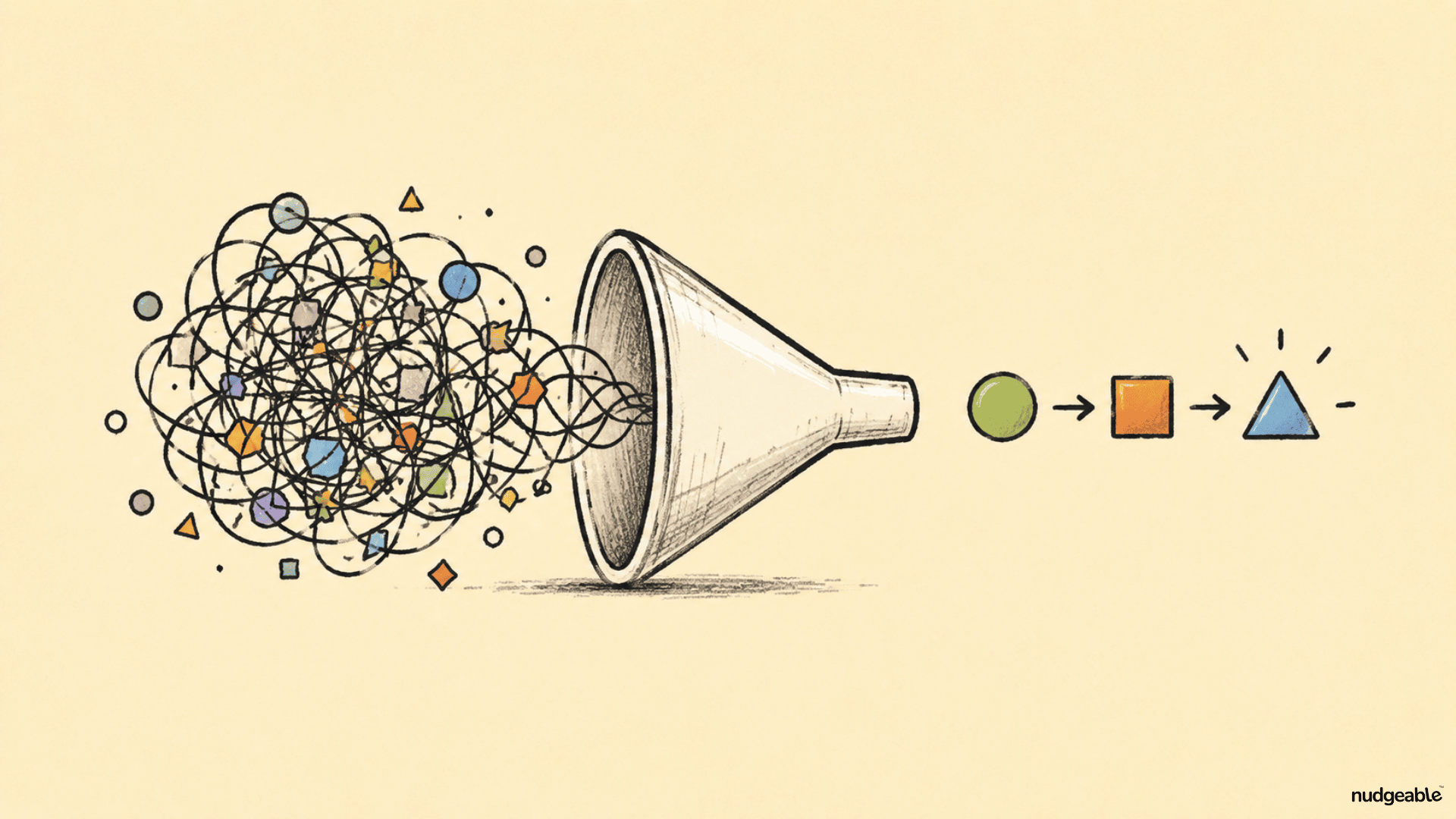
Broad learning objectives need to be converted into small and observable workplace actions.
Small improvements can create meaningful change
The turnaround of British Cycling is often linked to the idea of aggregating marginal gains. Instead of searching for one dramatic intervention, the team examined the many factors involved in cycling and looked for small improvements in each one.
The same principle can be applied to employee behavior change after training.
A participant does not need to transform their entire leadership style on Monday morning. They can begin with one conversation, one meeting or one decision. Once that behavior becomes easier, another action can follow.
This also reduces the risk of people feeling overwhelmed. When a training program ends with a list of 15 things to change, most participants struggle to begin any of them. One clearly defined action gives the brain somewhere to start.
Progress comes from repeating useful behaviors until they require less conscious effort.
Why post-training reinforcement matters
Organizations usually manage everything that happens before and during a corporate training program. Invitations are sent, attendance is tracked, facilitators are evaluated and participant feedback is collected.
Far less attention goes into what happens after everyone returns to work.
That is where most of the value is either created or lost.
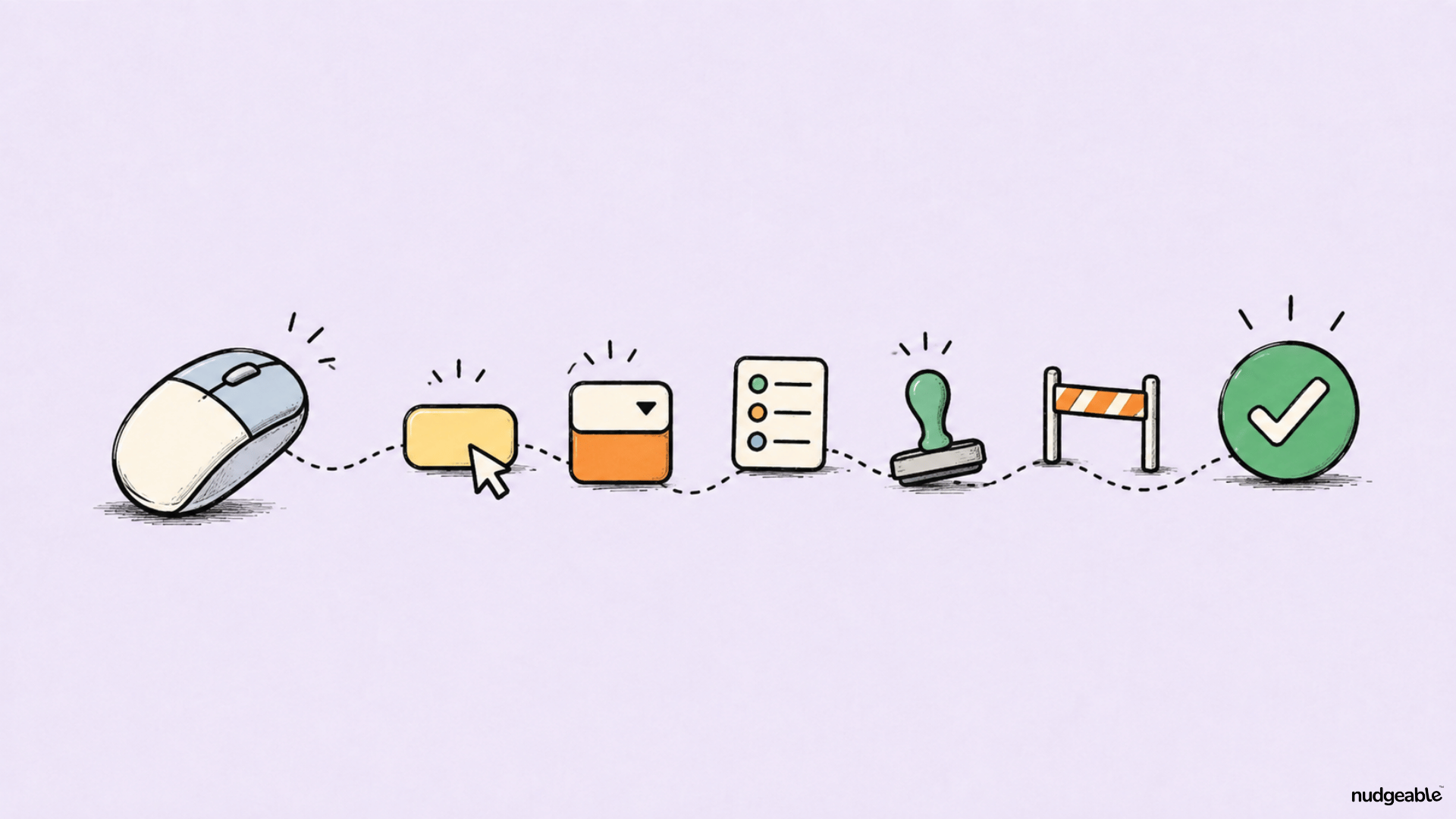
A useful post-training reinforcement journey should help participants:
- Select workplace actions relevant to their role
- Decide when and how often they will practice
- Remember the action during the flow of work
- Receive timely feedback or encouragement
- Reflect on what happened
- Continue long enough for the behavior to become easier
The way training effectiveness is measured also needs to change.
Attendance tells us who was present. A satisfaction survey tells us whether people enjoyed the session. A knowledge quiz tells us what they understood at that point in time.
None of these tells us whether the training changed how people work.
Moving from learning management to action management
L&D needs to extend its focus from managing learning to managing actions after learning.
The Nudgeable Actions Engine is an Action Management Platform designed for the application phase that begins when participants leave the training room.
It uses the training content, company context and participant’s own development plan to create relevant workplace actions. Participants choose what they want to practice, receive timely nudges and confirm application during the flow of work.
L&D can then see:
- The actions participants committed to
- How many actions were completed
- How application changed over time
- Which training cohorts need more support
Training can create awareness and intention. Continued practice helps turn that intention into everyday behavior and eventually into habits.
The real test of a corporate training program begins after the training room is empty.
Instead of asking only, “Did they attend?”, we should also ask, “Did they apply it?”