Psychological Reactance at Work: Why Employees Resist Control
Employees may resist a reasonable request when it feels like their freedom is being removed. This blog explains psychological reactance at work and how managers can preserve meaningful choice while maintaining clear expectations.
Do not read the rest of this blog.
There is a fair chance that sentence made you slightly more curious to continue.
Behavioral science has a name for this: psychological reactance.
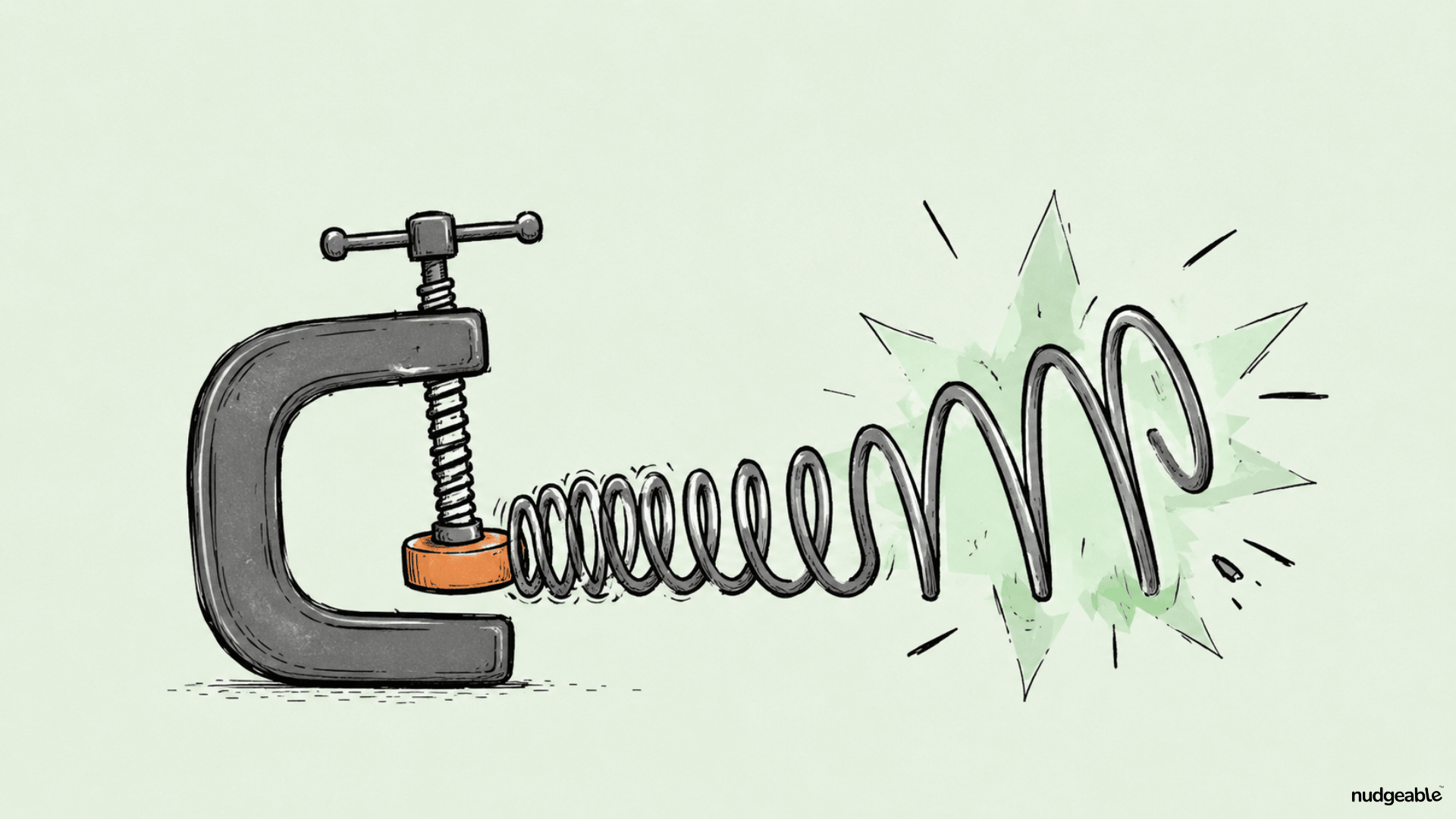
Reactance occurs when people feel that their freedom to choose is being restricted. Instead of evaluating the request itself, they begin reacting to the feeling of being controlled.
That reaction may involve arguing, doing the bare minimum or wanting to do the exact opposite.
This creates an interesting problem for managers because a large part of management involves asking people to do things:
- Meet this deadline.
- Return to the office.
- Use this process.
- Attend this training.
- Complete this form.
- Support this project.
Perceived freedom can still influence the response.
Key insight
Employees may support the goal while resisting the way the decision has been imposed on them.
Resistance can be a response to lost choice
Psychologist Jack Brehm introduced psychological reactance theory in 1966. The central idea is intuitive: when people believe a freedom is being removed or threatened, they become motivated to restore it.
We saw versions of this during COVID-19 restrictions. Some people interpreted a mask requirement less as a health decision and more as someone telling them what they were allowed to do.
Similar dynamics appeared when organizations mandated office returns after employees had experienced greater control over where and how they worked.
The same process appears in smaller workplace interactions.
A manager says, “I need you to finish this by Friday.” The employee may hear, “I have no control over my time.”
A leader says, “Everyone must follow this exact process.” The employee may think, “You do not trust me to use judgment.”
The resulting resistance can look like a motivation problem when part of the issue is a perceived loss of autonomy.
Pressure can create more resistance
This creates a trap for managers:
- An employee resists.
- The manager becomes more forceful.
- The employee feels even less control.
- Resistance increases.
- The manager concludes that the employee is difficult.
Workplaces still need deadlines, policies and standards. The practical question is:
Where can I preserve meaningful choice even when the outcome is non-negotiable?
“But you are free” can change a request
One technique connected with reactance research is called But You Are Free, or BYAF.
The idea is simple. Make a request and explicitly remind the person that they can refuse.
For example:
“Would you be willing to review this by tomorrow? If your workload is too high, you are free to say no.”
A 2013 meta-analysis covering 42 studies found that adding this reminder generally increased compliance. A later pre-registered meta-analysis of 52 experiments found an overall medium effect, but also identified substantial concerns about bias and reproducibility. When only the studies judged to have a low risk of bias were examined, the effect was no longer clear.
BYAF should therefore not be treated as a magic phrase for making people agree.
The broader insight is more useful: people respond differently when they feel they are choosing rather than being forced.
Key insight
A voluntary commitment begins with greater ownership than another instruction placed on someone’s list.
Preserve choice around the path
Managers cannot make everything optional.
A client deadline may genuinely be Friday. A regulation may have to be followed. The company may have decided that a particular system must be used.
Even when what needs to happen is fixed, there may be flexibility in how it happens.
Suppose the goal is to launch a new customer process by September 30. The manager can still let the team decide:
- How to divide the work
- Which milestones to use
- Who owns each component
- How frequently to meet
- Which approach to test first
The boundary remains clear while the team retains autonomy inside it.
Define the destination. Create as much freedom as possible around the route.
Small choices can matter
Autonomy does not always require handing over major decisions.
Instead of assigning one training session, offer two available timings. Instead of prescribing the format for every update, agree on the information required and let the employee choose how to communicate it.
Other small choices include:
- Letting the team decide who takes each project role
- Asking someone to choose from three development actions
- Allowing flexibility over the order of work
- Inviting employees to select how often they receive a reminder
The manager maintains structure, while the employee experiences some control over the process.
Language can trigger reactance
Compare these messages:
“You need to do this.”
“Here is what we need to achieve. How would you approach it?”
Or:
“Everyone must follow these five steps.”
“These two requirements are fixed. You have flexibility on everything else.”
The second version should not pretend people have freedom when they do not. Fake choice can be more irritating than no choice.
If a decision has already been made, say so. Be equally clear about the parts employees can still influence.
Three ways to reduce reactance
Managers can begin with three practical changes:
Separate what is fixed from what is flexible. Explain the boundary rather than controlling everything inside it.
Replace unnecessary commands with choices. If the method does not matter, let the employee decide it.
Invite commitment. Ask what the person is willing to take on instead of automatically assigning another development action.
The Nudgeable Actions Engine uses this principle after training. Participants can accept, reject or modify suggested actions, then choose how frequently and for how long they want to practise them.
Organizations need rules, and managers sometimes need to make decisions people dislike. The useful distinction is between necessary and unnecessary control.
The employee who appears resistant may not be rejecting the goal. They may be reacting to the feeling that the decision has been taken away from them.
Sometimes greater commitment begins by giving a little freedom back.