How Ritz-Carlton Turns Customer-Centricity Into Everyday Actions
Ritz-Carlton’s service culture works because employees are not left with an abstract instruction to “be customer-centric." They are given simple behavioral expectations.
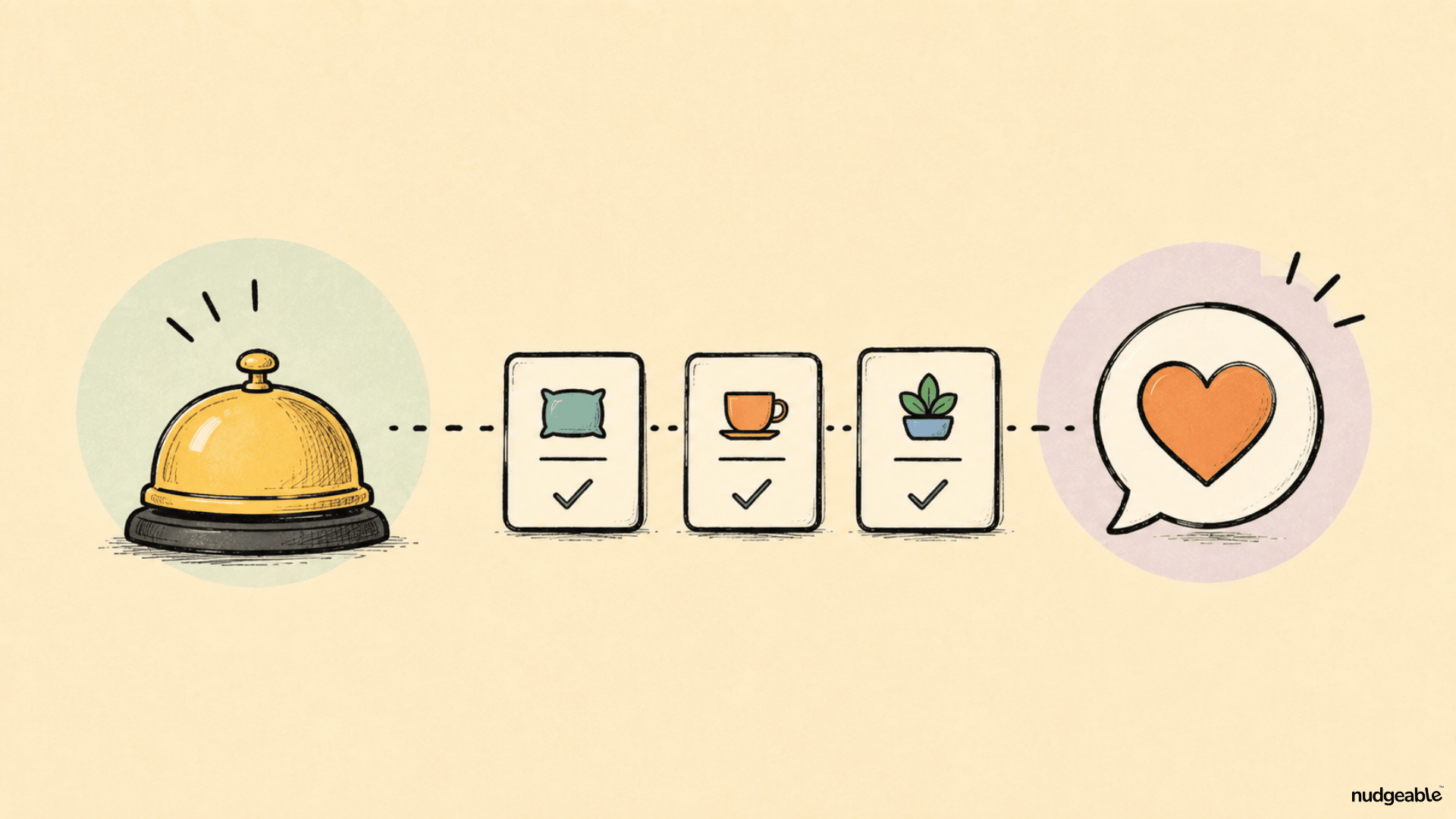
Most companies say they want to be customer-centric.
The problem is that customer-centricity is too vague to act on.
What does it actually mean for an employee at 10:30 on a Tuesday morning?
Should they respond faster? Use the customer’s name? Bend a policy? Anticipate a need? Follow up after a problem is solved?
This is where Ritz-Carlton has done something particularly well.
It has taken a broad cultural idea like “exceptional service” and translated it into specific, repeatable actions employees can practise every day.
That is a useful lesson for any organization trying to turn values into behavior.
Start With a Simple Identity
At the heart of Ritz-Carlton’s service culture is its well-known motto:
“We are Ladies and Gentlemen serving Ladies and Gentlemen.”
It does more than describe how guests should be treated.
It also tells employees how they should see themselves.
They are expected to behave with dignity, professionalism, judgment, and respect.
That matters because behavior becomes much stronger when it is connected to identity.
Instead of simply telling someone:
“Provide excellent customer service.”
the organization is reinforcing:
“This is how people like us behave here.”
That creates a much clearer cultural standard.
The Three Steps of Service Make Customer-Centricity Observable
Ritz-Carlton reinforces its service philosophy through three simple steps.
1. Give a Warm and Sincere Greeting
Employees are expected to welcome guests warmly and use their names whenever possible.
On paper, that sounds almost too simple.
But compare these two instructions:
“Make customers feel valued.”
versus:
“Greet the guest warmly and use their name when you know it.”
The first is an aspiration.
The second is a behavior.
A concierge saying:
“Good afternoon, Mr. Sharma. Welcome back.”
creates a small moment of recognition.
And that is often how customer experience works.
It is built through dozens of small signals that tell someone:
“We noticed you.”
2. Anticipate Needs Before the Customer Has to Ask
The second step is more powerful.
Ritz-Carlton employees are encouraged to respond not only to what guests explicitly request, but also to their unexpressed needs.
Imagine a guest goes for a run every morning.
A normal service model waits until they ask for another bottle of water or fresh towels.
A more customer-centric employee notices the pattern and acts before the request appears.
That shift matters.
Most customer service is reactive:
Customer asks → employee responds.
Exceptional service often happens one step earlier:
Employee notices → employee acts.
Anticipation is difficult to put into a script because it requires attention and judgment.
Which is why employees also need permission to use both.
3. Make the Farewell Matter
The third step is a warm goodbye, again using the guest’s name where possible.
This is another small behavior with a disproportionately large effect.
The final moments of an experience often shape how people remember it.
A front-desk employee saying:
“Thank you for staying with us, Ms. Kapoor. We hope to welcome you back soon.”
takes seconds.
But it closes the experience deliberately instead of allowing the transaction to simply end.
These three steps are not complicated.
That is exactly the point.
Great cultures often make the important behaviors simple enough to repeat.
Values Become Useful Only When They Guide Behavior
Ritz-Carlton goes beyond the three service steps through a broader set of service values.
Employees are encouraged to build genuine relationships with guests, respond to both expressed and unexpressed needs, and take ownership of creating memorable experiences.
Again, the interesting part is specificity.
Take a common company value such as:
“We put customers first.”
Almost every organization could say this.
But unless employees know what they should do differently because of that value, it has very little behavioral value.
Now translate it into actions:
Remember a returning customer’s preference.
Take ownership instead of immediately transferring a problem.
Follow up after a difficult issue is resolved.
Notice something the customer may need before they ask.
Use the customer’s name when appropriate.
Suddenly, the value becomes visible.
And once behavior is visible, it can be taught, reinforced, recognized, and repeated.
But Clear Behaviors Are Only Half the Story
Employees can know exactly what good service looks like and still fail to deliver it if the organization does not give them enough freedom to act.
This is where Ritz-Carlton’s approach to empowerment becomes particularly interesting.
The company is famous for allowing employees to spend up to $2,000 per guest incident to resolve a problem or create a memorable experience without first seeking managerial approval.
The headline always focuses on the $2,000.
I think the more important part is the message behind it:
“We trust you to make a decision.”
Most employees are not regularly spending $2,000.
But they know they have permission to act.
That changes the psychology of the interaction.
Compare:
“I need to check with my manager.”
with:
“Let me see what I can do for you.”
Very different customer experience.
The Joshie Story Shows What Empowerment Looks Like
One of the most famous Ritz-Carlton stories involves a stuffed giraffe called Joshie.
In 2012, Chris Hurn and his family stayed at the Ritz-Carlton Amelia Island in Florida.
After returning home, they realized their young son had left Joshie behind.
To comfort him, Hurn told his son that Joshie had decided to extend his vacation at the hotel.
The Ritz-Carlton staff eventually found the toy.
The obvious thing to do would have been to put Joshie in a box and send him home.
Instead, the employees decided to play along.
They photographed Joshie enjoying his extended holiday around the resort.
He relaxed by the pool.
He visited the spa.
He even spent some time helping the loss-prevention team.
The hotel then sent Joshie home with the photographs and his own Ritz-Carlton ID badge.
It became a wonderful story about customer delight.
But the most interesting part is not the creativity itself.
It is the organizational environment that made the creativity possible.
There was almost certainly no process manual saying:
“If a child leaves behind a stuffed giraffe and the parent invents a story about an extended vacation, create a photo album.”
The employees understood the broader principle.
They understood what kind of experience the company wanted to create.
And they had enough autonomy to make it happen.
That combination is powerful.
Customer-Centricity Needs Both Clarity and Freedom
This is where many customer experience programs break down.
Some organizations give employees detailed scripts but almost no discretion.
Employees know exactly what to say, but cannot solve anything without approval.
Others talk endlessly about empowerment but provide no clear behavioral standard.
Employees have freedom, but little guidance about what great service actually looks like.
Ritz-Carlton combines both.
Clear expectations + freedom within boundaries.
That is a much stronger model.
For any organization trying to improve customer experience, three questions are worth asking:
What should employees always do?
For example: acknowledge the customer, take ownership, follow up.
What should employees never do?
For example: dismiss the problem, blame another team, make promises they cannot keep.
Where are employees trusted to use judgment?
For example: waive a small fee, provide an upgrade, spend extra time solving an issue, or create a personalized recovery.
That is much more useful than simply asking people to “delight the customer.”
Turn Broad Values Into Micro-Actions
If your organization has a value such as “Customer First,” take it down one level.
Then take it down another.
Suppose the value is:
Take ownership.
That could become:
Do not transfer a customer until you have explained what happens next.
Give the customer a clear follow-up time.
Personally check that an escalation was resolved.
Find the right person instead of simply telling the customer whom to contact.
Suppose the value is:
Know your customer.
That could become:
Review the customer’s history before an important conversation.
Remember one preference from a previous interaction.
Ask what outcome the customer is ultimately trying to achieve.
These are small actions.
But repeated actions are what eventually create culture.
This Is the Bigger Lesson From Ritz-Carlton
Organizations often spend a lot of time defining values.
The harder work is translating those values into what someone should actually do differently tomorrow.
Ritz-Carlton’s service culture works because employees are not left with an abstract instruction to “be customer-centric.”
They are given simple behavioral expectations.
They see stories of those behaviors being practised.
They are trusted to use judgment.
And those actions are reinforced again and again until they become normal.
That same principle applies far beyond hospitality.
- Leadership.
- Collaboration.
- Psychological safety.
- Inclusion.
- Customer-centricity.
If you want any of these to become part of the culture, the question is the same:
What are the specific actions that make this value visible?
That is also the thinking behind the Nudgeable Action Management Platform.
Training can explain what customer-centricity means.
The next step is converting that idea into specific actions employees can practise in the flow of work, then reinforcing those actions until they become part of how people naturally operate.
Because customers do not experience your values statement.
They experience the behaviors your employees repeat every day.